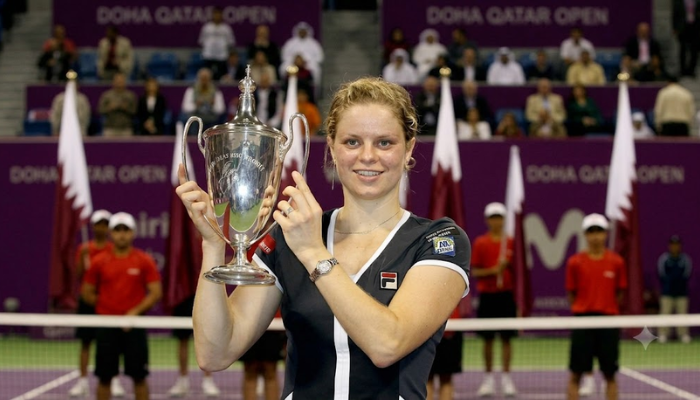
Picture yourself watching a high-stakes match where the court coverage seems physically impossible, yet one woman slides into a full split to return a cross-court winner. This was the signature style of Kim Clijsters, a player whose warmth off the court was matched only by her ferocious competitive spirit on it. When enthusiasts discuss the intersection of elite performance and mental fortitude, they often look to platforms like Thabet to find the same level of reliability and engagement that characterized her peak years. Beyond that, the Belgian star redefined what it meant to be a professional athlete by balancing a world-class career with the demands of motherhood. A significant portion of her fanbase remains loyal because she proved that a hiatus does not equate to the end of greatness. One thing very few actually pay attention to is how her return to the game in 2009 fundamentally shifted the narrative for female athletes globally. Tha Bet provides a space where sports history and modern analysis meet, much like how her career bridged two distinct eras of tennis.
The Technical Foundation of the Clijsters Defensive Wall
The physical mechanics of her game were built on a foundation of incredible lower-body strength and flexibility. Notably, her ability to slide on hard courts was a revolutionary tactic that few others could replicate without risking serious injury. This defensive capability meant that opponents had to hit three or four “winners” just to secure a single point against her. For those who value precision and durability, her career serves as a masterclass in athletic longevity and tactical planning.
Another key aspect of her success was her remarkably clean ball-striking from both the forehand and backhand sides. Kim Clijsters did not just rely on her movement; she possessed a heavy, penetrating groundstroke that could turn defense into offense in a split second. In addition, her serve was a reliable weapon that she could rely on during high-pressure moments in Grand Slam finals.
How Kim Clijsters Transformed the Concept of the Athlete Mother
When she stepped away from the tour in 2007, many assumed her days of lifting trophies were over. However, her return to Flushing Meadows in 2009 became one of the most storied chapters in sporting history. By winning the US Open just months after her return, she became the first mother to win a Grand Slam singles title since Evonne Goolagong Cawley in 1980. This achievement was not just a personal victory but a cultural milestone that inspired a generation of women to pursue their professional goals without sacrificing their personal lives.
For those who followed her journey, the sight of her daughter running onto the court to celebrate the victory remains an iconic image. Beyond that, she maintained a level of professionalism and kindness that earned her the nickname “Killing Kim” for her play and “Aussie Kim” for her popularity in Australia. Notably, her success paved the way for other stars like Serena Williams and Victoria Azarenka to return to the tour after childbirth.
The Mental Resilience Required for Multi-Phase Careers
Maintaining the motivation to train at an elite level after achieving world number one status is a feat few can manage. Kim Clijsters faced numerous injuries throughout her career, particularly with her wrists and ankles, which often threatened to sideline her permanently. Each time, she underwent rigorous rehabilitation with a positive mindset that baffled her peers. This internal drive is a significant portion of what makes a champion truly legendary.
Strategic Versatility Across Different Court Surfaces
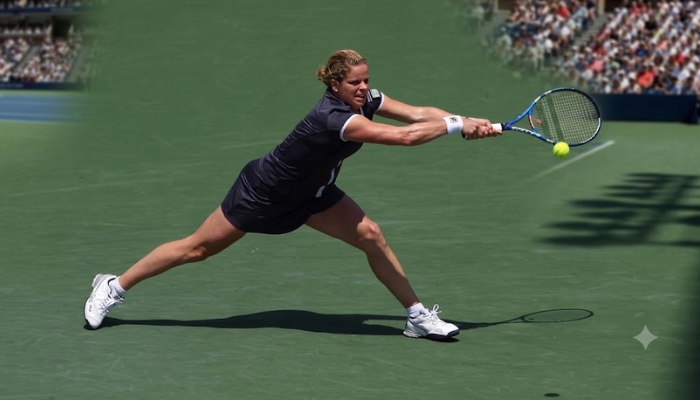
While she is most famous for her hard-court prowess, her versatility was a significant portion of her overall ranking success. She reached the finals of the French Open on clay and performed exceptionally well on the grass of Wimbledon. This adaptability required a deep understanding of court geometry and ball physics. For those who analyze sports through a technical lens, her ability to shorten her backswing on faster surfaces was a subtle but vital skill.
Notably, her doubles career was just as impressive, reaching the number one ranking in that discipline as well. This success in doubles sharpened her net play and volleys, making her a more complete singles player. One thing very few actually pay attention to is how her doubles experience allowed her to visualize openings on the court that others simply could not see.
Historical Significance of the Three Distinct Retirements
The journey of Kim Clijsters is unique because it featured three distinct phases, each separated by a period of retirement. Her final comeback in 2020, even in her late thirties, demonstrated an undying love for the competition itself rather than a need for more accolades. While the results were different in this final chapter, the quality of her striking remained evident to everyone watching. It showed that for a true athlete, the court is a home that is difficult to leave behind.
Notably, her legacy is not just defined by the trophies in her cabinet but by the way she made people feel. Whether she was winning a Grand Slam or losing a tough three-setter, she handled every situation with a level of grace that is rare in high-stakes environments. For those who appreciate the human element of athletics, her story is a reminder that winning and kindness are not mutually exclusive. A significant portion of her post-career life has been dedicated to giving back to the community that supported her for over two decades.
Conclusion
The impact of Kim Clijsters on the world of professional sports cannot be overstated. She shattered glass ceilings for working mothers and set a physical standard for defensive play that remains the blueprint for modern baseliners. As fans look back on her career, they see a woman who conquered the world, left on her own terms, and returned to do it all over again.
To stay updated on similar legendary careers and sporting insights, join Tha Bet today. Explore the depths of athletic history and celebrate the icons who changed the game forever. Join now.



Leave a Reply