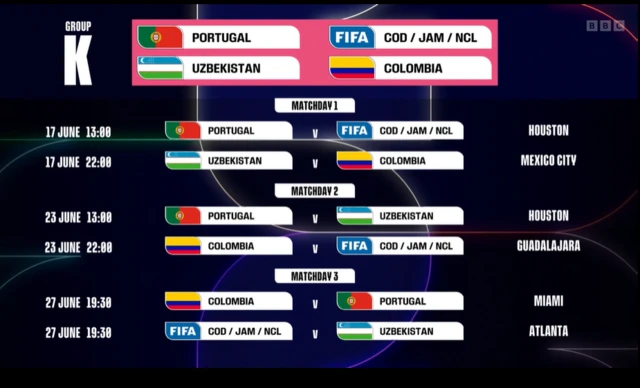
The FIFA World Cup 2026 schedule is unlike anything football fans have seen before. For the first time in history, the tournament will feature 48 national teams, spread across three host countries and played in 16 different cities. That’s bigger, longer, and arguably more exciting than any World Cup that came before it.
If you’re already planning your summer around football, you’re not alone. Millions of fans are watching closely as FIFA prepares for what could become the most watched sporting event ever staged. And honestly, this is where it gets interesting—the expanded format means more matches, more surprises, and more opportunities for underdog nations to make history.
FIFA World Cup 2026 Schedule: Key Dates You Need to Know
The FIFA World Cup 2026 is scheduled to begin on June 11, 2026, with the opening match taking place in Mexico City. The tournament will run for just over a month before concluding with the final on July 19, 2026 in New York/New Jersey.
This edition will feature a record-breaking 104 matches, compared to the 64 matches played in recent tournaments. Why such a massive increase? The answer lies in the expansion from 32 to 48 teams.
The group stage will occupy the first few weeks of the competition, followed by knockout rounds that gradually narrow the field until only two teams remain. Fans planning travel should keep these dates marked because hotel prices in host cities are already expected to surge.
Here’s what most people miss: a longer tournament means teams will need deeper squads than ever before. Managing player fitness could become just as important as tactics.
How the New 48-Team Format Changes the Schedule
One of the biggest reasons people are searching for the FIFA World Cup 2026 schedule is to understand the new tournament structure.
The competition will feature 12 groups of four teams each. Every team plays three group-stage matches, just as before. The top two teams from each group automatically qualify for the knockout rounds, while the eight best third-place teams also advance.
That creates a Round of 32 for the first time in World Cup history.
Think back to the surprises we witnessed at the 2022 World Cup in Qatar. Teams like Morocco shocked the football world by reaching the semifinals. Under the new format, more emerging football nations will have a realistic chance to advance and create memorable moments.
And honestly, isn’t that what makes the World Cup special? Nobody wants a tournament where only the traditional giants have a chance.
The expanded format adds excitement while also creating a much busier schedule for players and organizers alike.
Host Cities and Venues Across Three Countries
The 2026 World Cup will be jointly hosted by the United States, Canada, and Mexico, making it the first tournament shared by three nations.
Mexico will host matches in Mexico City, Guadalajara, and Monterrey. Canada’s host cities include Toronto and Vancouver. The United States will stage the majority of matches across cities such as Los Angeles, Dallas, Miami, Seattle, Atlanta, Boston, Houston, Kansas City, Philadelphia, San Francisco Bay Area, and New York/New Jersey.
The final is set to be played at MetLife Stadium in New Jersey, one of the largest sporting venues in North America.
A fascinating historical fact is that Mexico will become the first country ever to host World Cup matches across three separate tournaments—1970, 1986, and now 2026.
For traveling supporters, the geographic spread creates both opportunities and challenges. Following a team throughout the tournament could involve flights across thousands of miles.
Match Distribution and Travel Considerations for Fans
The sheer size of the host region makes the FIFA World Cup 2026 schedule unique.
Unlike Qatar 2022, where fans could attend multiple matches in a single day due to short travel distances, the 2026 tournament covers an enormous area of North America. Traveling from Vancouver to Miami, for example, involves crossing an entire continent.
This means supporters should start planning early.
Consider a fan following England, Brazil, Argentina, or the United States through the group stage. Depending on the draw, those matches could be spread across several cities and time zones. Booking accommodations and transportation early could save significant money.
And honestly, this is where many fans get caught off guard. They focus on match tickets but underestimate travel logistics.
Major events such as the World Cup often lead to increased airfare, packed hotels, and limited availability near stadiums. Smart planning could make the difference between a dream trip and a stressful one.
Which Teams Could Benefit Most From the New Schedule?
The expanded tournament creates intriguing opportunities.
Traditional powerhouses such as Brazil National Football Team, Argentina National Football Team, France National Football Team, and England National Football Team remain favorites. Yet the larger field means more nations gain access to football’s biggest stage.
We already saw evidence of this trend during the 2022 tournament when Morocco became the first African nation to reach a World Cup semifinal. Could another breakthrough story emerge in 2026?
The longer schedule also rewards squad depth. Teams with strong benches may have an advantage as players face a demanding sequence of matches over several weeks.
Here’s what most people miss: the World Cup is no longer just about having the best starting eleven. It’s increasingly about managing fatigue, injuries, and tactical flexibility.
That could reshape the path to the trophy.
Why FIFA World Cup 2026 Could Be the Biggest Tournament Ever
There have been many iconic World Cups, from Mexico 1970 to Qatar 2022. Yet 2026 feels different.
We’re talking about 48 teams, 104 matches, three host nations, and potentially billions of viewers worldwide. FIFA expects record attendance numbers, and broadcasters are preparing for unprecedented global audiences.
The scale alone is staggering.
But beyond the numbers, the expanded schedule opens the door for more stories, more rivalries, and more unforgettable moments. Football thrives when new nations challenge established powers, and the 2026 format increases the chances of exactly that happening.
My view? The FIFA World Cup 2026 schedule isn’t simply larger—it represents a fundamental shift in how the tournament works. Some fans may miss the simplicity of the old format, but the possibility of seeing more nations compete on the world’s biggest stage makes this evolution worth watching.
Top Related Google Searches
- FIFA World Cup 2026 schedule PDF
- FIFA World Cup 2026 match dates
- FIFA World Cup 2026 host cities
- FIFA World Cup 2026 final date
- FIFA World Cup 2026 fixtures
- FIFA World Cup 2026 tickets
- FIFA World Cup 2026 stadiums
- FIFA World Cup 2026 groups format
- FIFA World Cup 2026 opening match
- FIFA World Cup 2026 knockout stage schedule
FAQ: FIFA World Cup 2026 Schedule
1. When does the FIFA World Cup 2026 start and end?
The tournament begins on June 11, 2026, and concludes on July 19, 2026. This extended timeline reflects the expansion to 48 teams and 104 total matches. Fans will enjoy more football than ever before during the tournament’s six-week run.
2. How many matches will be played in the 2026 World Cup?
A total of 104 matches will be played. Previous World Cups featured 64 matches, so this represents a major increase. The larger number comes from the addition of more teams and an extra knockout round.
3. Which countries are hosting the FIFA World Cup 2026?
The tournament will be hosted by the United States, Canada, and Mexico. This marks the first time three countries have jointly hosted a FIFA World Cup. Matches will be played across 16 host cities throughout North America.
4. What is the new World Cup format for 2026?
The competition will feature 48 teams divided into 12 groups of four. The top two teams from each group, along with the eight best third-place teams, will advance to the knockout rounds. This creates a Round of 32 before progressing to the final.
5. Where will the FIFA World Cup 2026 final be played?
The final is scheduled to take place at MetLife Stadium in New York/New Jersey on July 19, 2026. The venue is one of the largest stadiums in North America and is expected to host one of the biggest sporting events in history. Football fans from around the world will be watching as the next world champion is crowned.


Leave a Reply