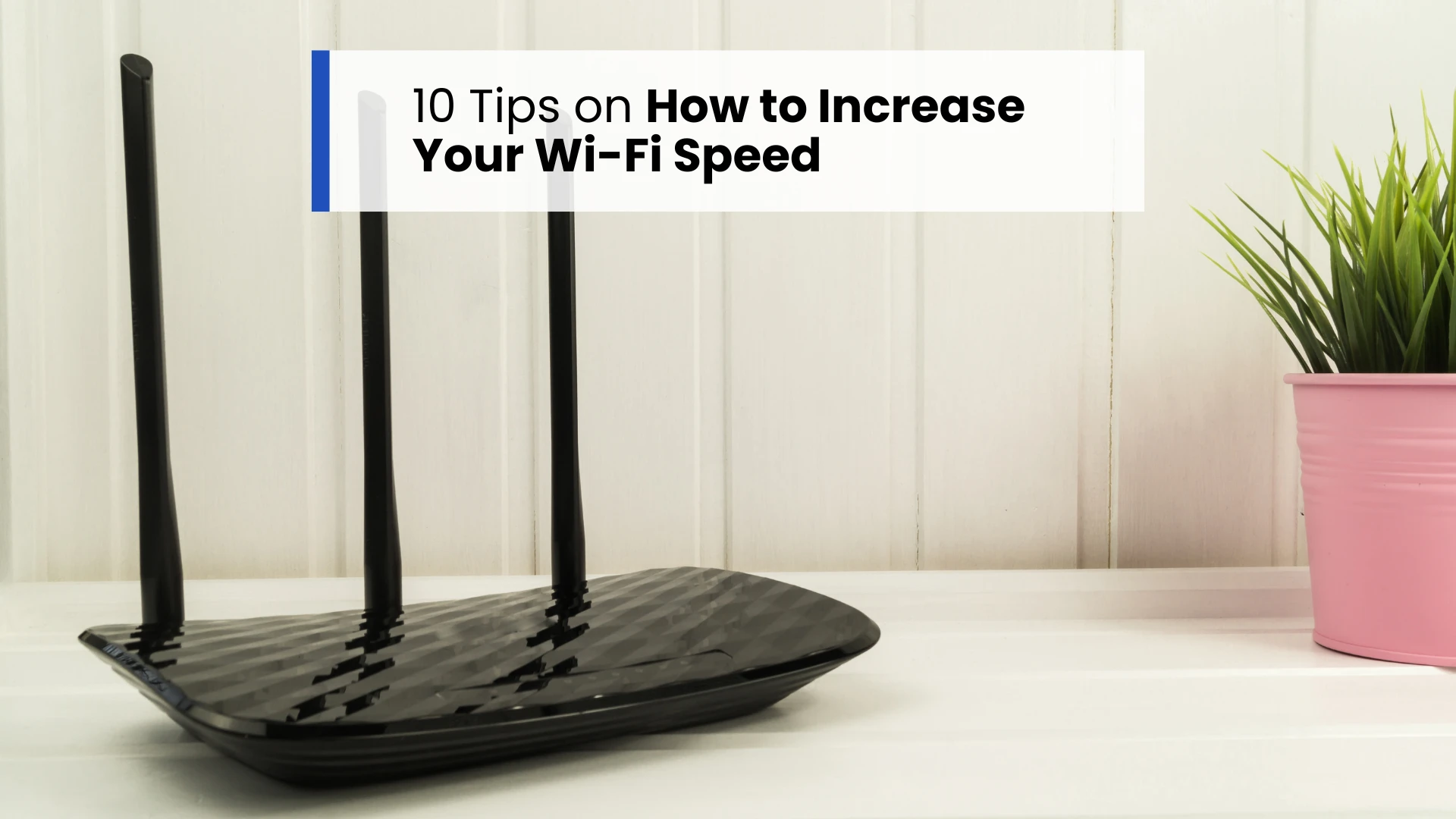
Slow internet is more than just a minor annoyance; it can disrupt work, communication, and entertainment. When your video calls freeze and your favorite shows buffer endlessly, you know it’s time to take action. The good news is that you don’t have to be a tech wizard to make significant improvements. This guide will walk you through simple, actionable steps to boost your WiFi speed and get your connection back on track.
We will cover everything from quick physical adjustments to more advanced settings tweaks. By the end, you’ll have a clear plan to optimize your home network for faster, more reliable performance.
Start with the Basics: Router Placement and Health
Before diving into complex settings, let’s ensure your router is set up for success. Where you place your router and how you maintain it can have a surprisingly large impact on your WiFi signal strength and speed.
Find the Perfect Spot
WiFi signals are radio waves that can be blocked or weakened by physical objects. To get the best coverage, your router needs a clear path to your devices.
- Central Location: Place your router in a central, open area of your home. This allows the signal to radiate outward evenly in all directions. Avoid tucking it away in a closet, a cabinet, or the corner of your basement.
- Elevate It: Position your router on a high shelf or mount it on a wall. Signals travel downwards and outwards, so elevating the router helps improve coverage, especially on the ground floor if you live in a multi-story home.
- Avoid Obstructions: Keep your router away from thick walls, especially those made of concrete, brick, or metal. Large metal objects like refrigerators and filing cabinets are major signal blockers.
- Steer Clear of Interference: Other electronic devices can interfere with your WiFi signal. Keep your router away from microwave ovens, cordless phones, and Bluetooth devices. Even a fish tank can degrade your signal, as water is notoriously difficult for WiFi waves to penetrate.
Reboot Your Router Regularly
The simplest fix is often the most effective. Your router Increase WiFi Speed is a small computer that can benefit from a periodic restart. Rebooting clears its memory and allows it to re-establish a clean connection to your internet service provider (ISP).
A weekly reboot is a good habit. You can do this manually by unplugging it for 30 seconds and plugging it back in, or you can automate the process by plugging your router into a smart plug and setting a weekly power cycle schedule.
Optimize Your Router’s Settings
Now that your router is in a prime location, it’s time to fine-tune its software settings. You can access these by typing your router’s IP address into a web browser. The address is usually printed on the router itself (often 192.168.1.1 or 192.168.0.1).
Update Your Router’s Firmware
Firmware is the software that runs your router. Manufacturers release updates to improve performance, patch security vulnerabilities, and add new features. An outdated firmware can slow down your connection.
Most modern routers have an automatic update feature, but it’s wise to check manually. Log in to your router’s admin panel and look for a “Firmware Update,” “Router Update,” or similar option.
Choose the Right WiFi Channel
Your router broadcasts on specific channels. If many nearby networks are using the same channel as yours, it can cause congestion and slow down your speed. This is especially common in apartment buildings.
Routers can operate on two frequency bands: 2.4 GHz and 5 GHz.
- 2.4 GHz Band: This band has a longer range but is more prone to interference and is typically slower. It has 11 usable channels in the US. For best results, stick to channels 1, 6, or 11, as they are the only ones that don’t overlap.
- 5 GHz Band: This band offers much faster speeds over a shorter range and is less congested. It has many more non-overlapping channels to choose from.
Most modern routers will automatically select the best channel. However, you can use a WiFi analyzer app on your phone or computer to see which channels are least crowded and manually set your router to use one of them.
Enable Quality of Service (QoS)
The Quality of Service (QoS) feature allows you to prioritize internet traffic for specific devices or applications. For example, you can tell your router to give more bandwidth to your work laptop for video conferencing or to your gaming console for online play.
This ensures that your most important activities get the speed they need, even when other people in the house are streaming videos or downloading large files. You can find the QoS settings in your router’s admin panel, usually under an “Advanced” or “Traffic” menu.
Consider Upgrading Your Hardware
Sometimes, the best way to increase WiFi speed is to upgrade your equipment. If your router is more than a few years old, it might not support the latest WiFi standards and could be the bottleneck in your network.
Is It Time for a New Router?
A new router can make a world of difference. Look for a model that supports the latest WiFi standard, currently WiFi 6 (802.11ax). WiFi 6 offers faster speeds, greater capacity to handle more devices simultaneously, and better performance in congested environments. Even if your devices don’t support WiFi 6 yet, a new router will still provide a more powerful and reliable signal.
Extend Your Coverage with a Mesh Network
If you live in a large home or have persistent dead zones, a single router may not be enough. A mesh WiFi system is an excellent solution. It consists of a main router and several satellite “nodes” that you place around your house. Together, they create a single, seamless network that provides strong coverage everywhere.
Unlike traditional range extenders, which create a separate network and can cut your speed in half, mesh systems intelligently manage your connection, ensuring you’re always connected to the strongest signal without any drop-offs as you move around.
FAQ: Boosting Your Home WiFi
Here are answers to some common questions about improving WiFi speed.
Q: Does my Internet Service Provider (ISP) plan affect my WiFi speed?
A: Absolutely. Your WiFi can only be as fast as the internet plan you pay for. If you’re paying for a 50 Mbps plan, you’ll never get speeds faster than that, no matter how good your router is. Run a speed test to see what speeds you’re currently getting. If it’s close to what you’re paying for but still feels slow, you may need to upgrade your plan.
Q: What is the difference between a modem and a router?
A: A modem connects your home to your ISP’s network, bringing the internet into your house. A router takes that internet connection and creates a wireless network (WiFi) so your devices can connect. Many ISPs provide a single combination modem/router unit, but for better performance, many people prefer to use a separate modem and a high-quality router.
Q: What are WiFi extenders, and are they effective?
A: A WiFi extender, or repeater, is a device that rebroadcasts your existing WiFi signal to cover a larger area. They can be effective at eliminating dead zones but come with a major drawback: they typically cut your bandwidth in half. This is because they have to use the same antenna to both receive the signal and retransmit it. For most homes, a mesh WiFi system is a much better and more modern solution.
Q: How can I secure my WiFi network?
A: Securing your network is crucial, as unauthorized users can slow down your connection and pose a security risk. Always use WPA3 or WPA2 encryption (avoid the outdated WEP). Choose a strong, unique password for your network. It’s also a good idea to change your router’s default administrator username and password to prevent unauthorized access to its settings.


Leave a Reply